Veterinary acupuncture has earned a defensible place in modern small-animal pain management. The AAHA/AAFP 2015 Pain Management Guidelines for Dogs and Cats, carried into the updated 2022 AAHA guidelines, describe it as a "compelling and safe method for pain management in veterinary patients." For dogs living with osteoarthritis, it is one of the most useful tools we have for reducing pain, enhancing mobility, and promoting healing as part of a coordinated plan.
At Greenway Veterinary Acupuncture, our two veterinary surgeons have, between us, more than two decades of clinical experience using acupuncture for arthritic dogs across home visits and our three Chilterns-and-London clinics. We see it work, week after week, alongside the rest of vet-led care.
Acupuncture is complementary, not alternative. It sits inside your dog's overall arthritis plan, in step with your own veterinary surgeon, and that is exactly where it does its best work. This article sets out what acupuncture genuinely contributes for a dog with osteoarthritis, what the evidence supports, what a session is actually like, and the boundary lines we are always honest about.
Osteoarthritis (OA), sometimes called degenerative joint disease, is the gradual breakdown of joint cartilage with associated changes in the surrounding bone, joint capsule and soft tissues. It is one of the commonest sources of chronic pain in dogs, particularly in older and larger-breed dogs, and it progresses slowly over months and years.
OA is managed rather than cured. Good care isn't aimed at reversing the joint (that isn't possible in any modality) but at controlling pain, preserving function, and protecting quality of life over the long haul. In practice that is achieved with several measures layered together: weight management, appropriate exercise, your vet's prescribed pain relief, supportive therapies such as physiotherapy and hydrotherapy, and acupuncture.
If your dog has not yet been formally assessed, that conversation with your veterinary surgeon is the first step. Acupuncture fits into a confirmed arthritis plan; it does not replace the diagnosis.
Modern arthritis care is multimodal. No single measure carries the whole load, and the dogs who do best are usually the ones whose owners and vets layer several together. Acupuncture is one of those layers, and an effective one.
In practice that means we coordinate openly with the rest of your dog's care: the weight and exercise plan, any anti-inflammatory or pain medication your vet has prescribed, and hands-on rehabilitation such as veterinary physiotherapy or hydrotherapy. We actively welcome co-ordination with your vet and with everyone else involved in your dog's health. It isn't a competing pathway; it's a contribution to a shared plan, and joined-up care is what consistently produces the best results in our caseload.
Many owners come to us hoping to keep their dog comfortable without relying solely on long-term medication, and acupuncture is part of that conversation. To be clear: it is not a reason to reduce or stop a prescribed drug on your own. Those decisions belong to the veterinary surgeon who prescribed them, judged on how your individual dog is doing. What acupuncture does is broaden the range of tools available to you and your vet for keeping pain under control.
For dogs whose mobility makes travel hard, we deliver acupuncture calmly as a home visit. You can read more about how the service works on our acupuncture page.
The evidence base for veterinary acupuncture in chronic pain is real and growing, and the position from mainstream small-animal pain bodies is clear. The AAHA/AAFP 2015 Pain Management Guidelines (carried into the 2022 AAHA update) describe acupuncture as a "compelling and safe method for pain management in veterinary patients." That is a notable endorsement from inside mainstream small-animal practice, not a fringe position.
Clinical data in dogs supports the same direction of travel. In a 2017 prospective study of 181 dogs with neurological and musculoskeletal disease (Lane DM et al., 2017, Canadian Veterinary Journal), owners reported improvement in 79% of dogs on the Helsinki Chronic Pain Index, 84% on owner-assessed quality of life, and 78% on visual analogue pain scales after a course of acupuncture. We read this honestly: it was a mixed cohort that included dogs with musculoskeletal disease rather than an osteoarthritis-only randomised controlled trial, and owner-reported outcomes are valuable but not interchangeable with controlled experimental measures. The signal is encouraging and is consistent with what we see in clinic.
What the evidence reasonably supports is that, for many dogs, acupuncture contributes meaningfully to better-reported pain, function and quality of life. For the wider published picture across conditions, see our clinical evidence overview. If you're still at the "does any of this actually work?" stage, our general companion post, does acupuncture work for dogs?, is the better starting point. This page assumes a named problem (your dog's arthritis) and addresses it directly.
Acupuncture has plausible, studied physiological mechanisms. A 2021 review of veterinary acupuncture (Dewey CW & Xie H, 2021, Open Veterinary Journal) describes several proposed pathways: release of the body's own endogenous opioids, activation of descending pain-inhibition systems in the central nervous system, and local and systemic anti-inflammatory effects.
For an arthritic dog the relevance is direct. Chronic joint pain involves both the painful joint itself and a nervous system that, over time, becomes more sensitised to that pain. The proposed mechanisms act largely on that pain-processing side, which is why acupuncture's contribution is to comfort and movement. It helps dogs feel and move better, alongside the parts of the plan that target the joint and the inflammation themselves.
Owners of older, sore dogs often worry that treatment will be one more uncomfortable, stressful experience. It very rarely is. We deliberately give your dog a calm, individual experience: time, patience, and a non-surgery setting, not a rushed clinical procedure.
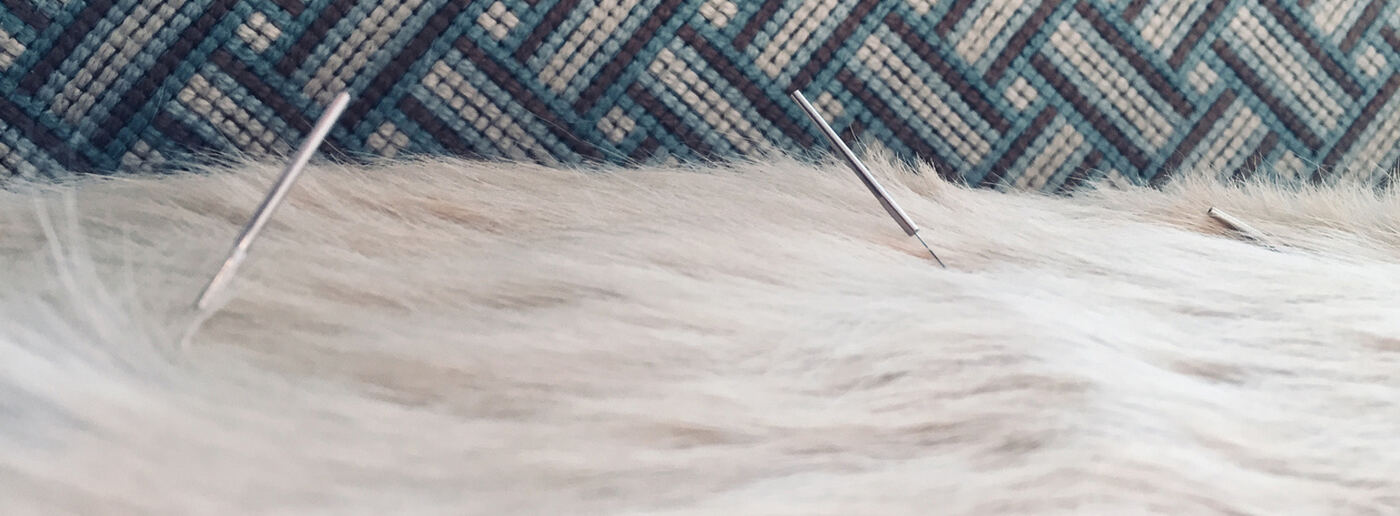
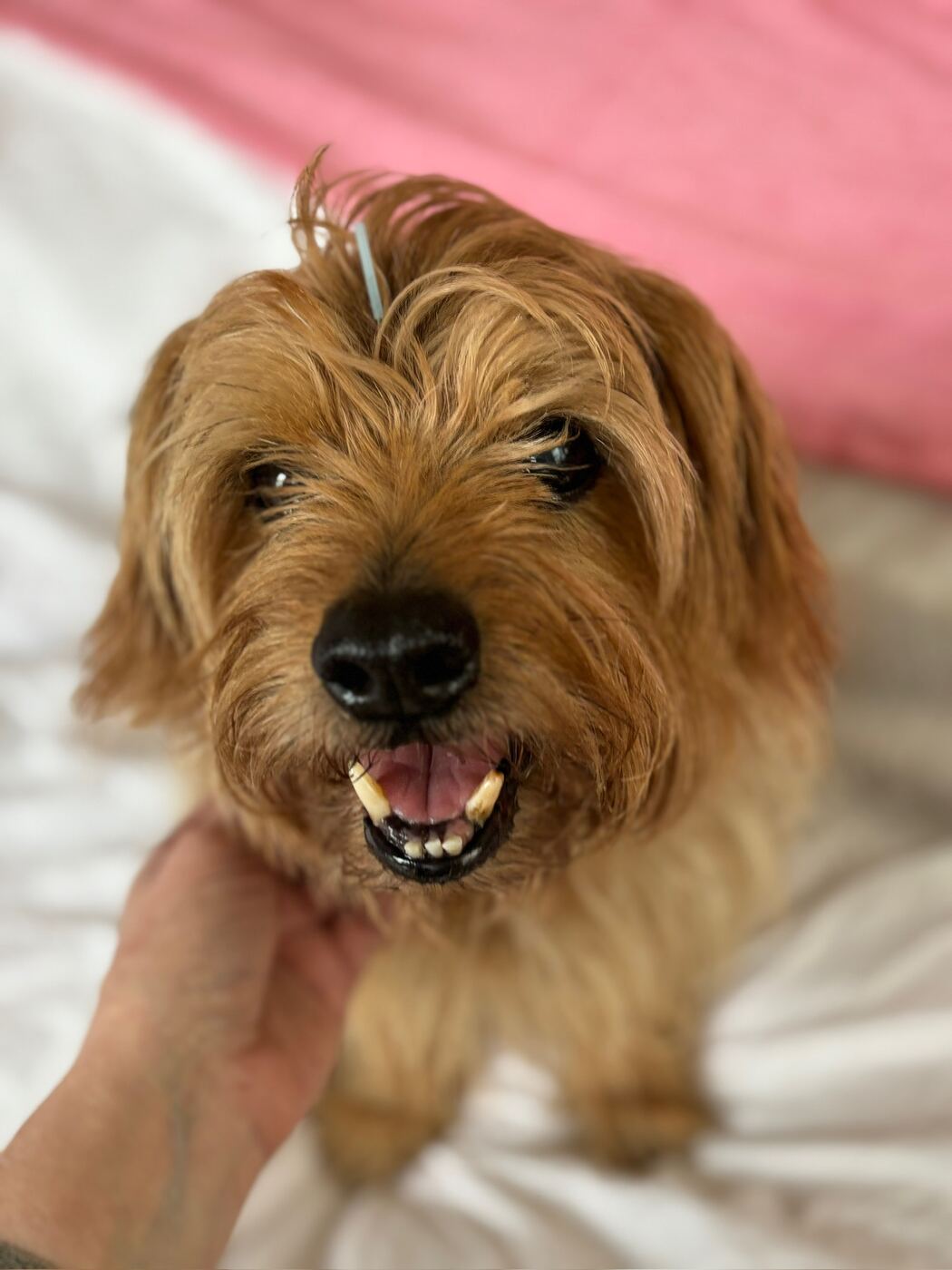
A first appointment is unhurried. Allow a good hour. Before any needles, we examine your dog, watch how they move, and talk with you about their history, their home, and what you are noticing day to day. The needles themselves are very fine; most dogs tolerate them easily, and we commonly see older arthritic dogs settle visibly once the first few needles are in. Some lean into it. Some doze off entirely.
For dogs whose mobility makes car journeys and busy waiting rooms genuinely painful, the home-visit option is often the kindest route. For more on a first appointment, see what to expect at a first acupuncture session.
In our clinical experience, dogs who respond well to acupuncture often show changes within the first few sessions, though every dog is different and some need a longer trial. We treat the opening course as a structured trial and review it openly with you. If it is working, we say so; if it isn't, we say that too. That honesty is part of the service.
Acupuncture is most useful for the dogs it suits, and our job is to assess that early and steer you accordingly, keeping your vet in the loop throughout so the whole plan stays joined up.
Track the change objectively
Judging whether an arthritic dog is genuinely moving better can be hard by eye alone. PAWSCHECK, a precision gait-analysis tool from our veterinary team, lets you track your dog's movement over time so you and your vet can see whether the plan is working.
For clarity:
- It does not cure arthritis. OA is degenerative and managed, not fixed.
- It does not repair or reverse the structural joint changes of osteoarthritis.
- It is not a replacement for your dog's prescribed pain relief, and not a reason to change or stop medication without your vet.
- It is not a substitute for veterinary assessment and ongoing review of your dog's arthritis.
Acupuncture's role is a supporting one: helping with the pain and mobility side of living with arthritis, as part of a plan your vet leads.
Osteoarthritis is a long road, but most dogs travel it comfortably with the right combination of care. Used well, alongside your vet, coordinated with the rest of the plan, and reviewed honestly, acupuncture is a genuine contributor to reducing pain, enhancing mobility, and promoting healing for an arthritic dog.
If you'd like to discuss whether acupuncture might suit your dog, do get in touch. Our aim is the same as yours: happy pet-families, living long and well together.
Educational, not a replacement for your primary vet
Your dog's primary veterinary surgeon remains your first port of call for ongoing arthritis management; this article is educational and does not replace that relationship.
Yes. Veterinary acupuncture is generally well tolerated, and the AAHA/AAFP 2015 Pain Management Guidelines describe it as a "compelling and safe method for pain management in veterinary patients." It is carried out only by qualified veterinary surgeons, after examining your individual dog. Older arthritic dogs are a routine part of our caseload, and most settle calmly into treatment.
Yes. Acupuncture is designed to work alongside vet-led management, including any prescribed pain relief. It is not a reason to reduce or stop medication on your own. Those decisions belong to your veterinary surgeon. The two work well together; that is the point of multimodal care.
There is no universal answer. In our clinical experience, dogs who respond well often show changes within the first few sessions, though every dog is different and some need a longer trial. We treat the opening course as a structured trial and review it openly with you.
Dr Claire Greenway
BVM&S MRCVS ABVA
If you think acupuncture could help your pet, get in touch.
Related Articles
Clinical Evidence for Veterinary Acupuncture
A vet-written summary of the peer-reviewed clinical evidence for veterinary acupuncture: pain management, osteoarthritis, neurological conditions, mechanism, safety, and the honest limits of the evidence.
Does Acupuncture Really Work for Dogs? A Vet's Honest Answer
A veterinary acupuncturist with 25 years of clinical experience explains the science, evidence and realistic expectations for dog acupuncture.
What to Expect at Your Pet's First Acupuncture Session
A vet-written guide to your pet's first acupuncture session: what the consultation looks like, how the needles feel, how pets usually react, session length, and what to do afterwards.